Rajasthani Paintings
16th to 19th centuries
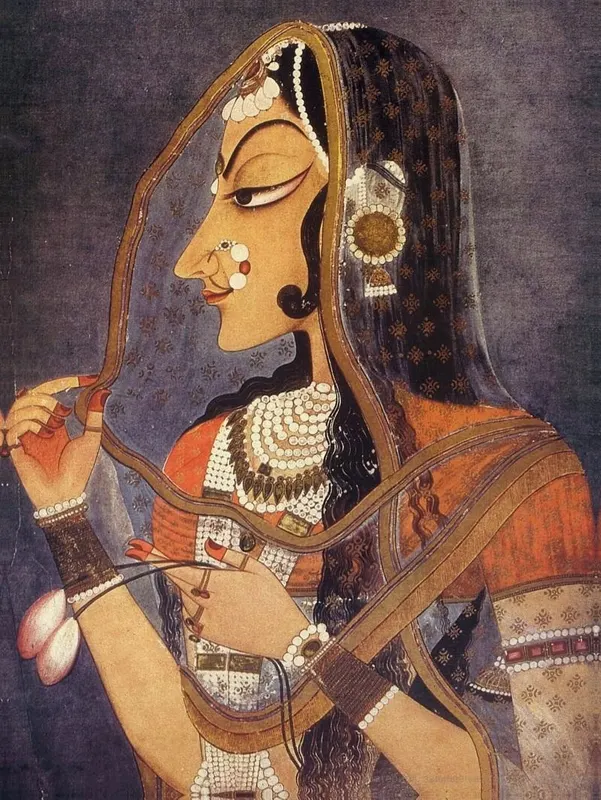
Rajasthani painting, also called Rajput painting, is a style of miniature painting that flourished in the royal courts of Rajasthan from roughly the 16th to 19th centuries. It grew out of Indian manuscript traditions and absorbed Mughal influences while keeping a distinct regional character marked by bold colours, flat perspective, and strong emotional expression.
The tradition is usually divided into several major schools (gharanas), each tied to a princely state: Mewar (known for vigorous, folk-rooted work), Marwar (Jodhpur and Bikaner), Hadoti (Kota and Bundi, famous for lush hunting and forest scenes), and Dhundhar (Amber-Jaipur). Each developed its own palette, facial types, and stylistic conventions.
Common themes include religious and devotional subjects, especially Krishna legends and the Bhagavata Purana; ragamala series pairing musical modes with visual moods; barahmasa cycles depicting the twelve months; courtly life, hunts, and portraits of rulers; and love poetry such as the nayika-bheda classifications of heroines.
The paintings were made with natural mineral and vegetable pigments, often with gold and silver detailing, on handmade paper. Their legacy continues today in folk forms like Phad scroll painting and Pichwai temple hangings.