Pichwayi Artist
16th Century till present
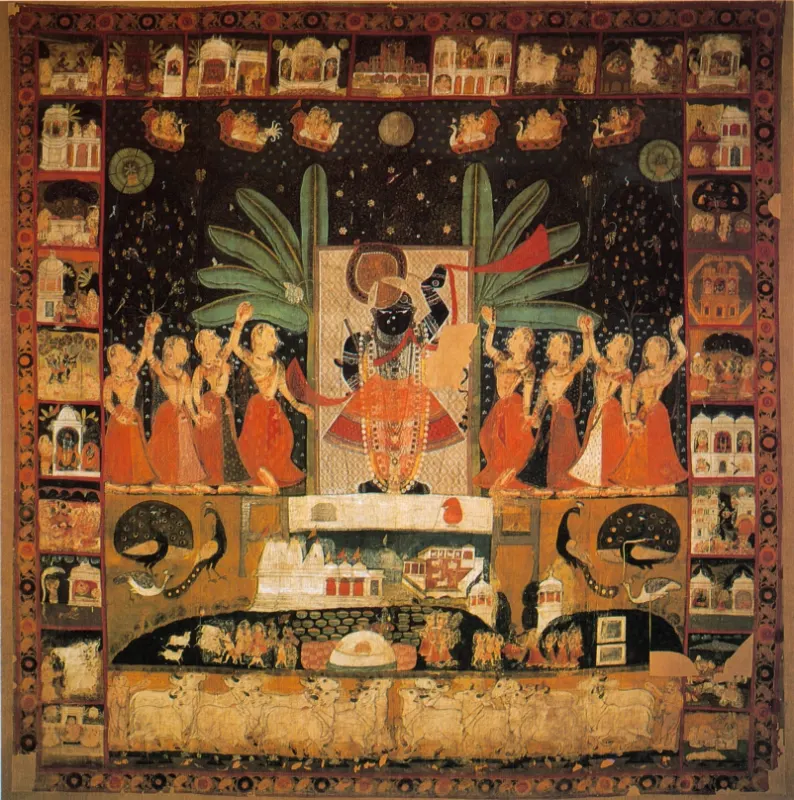
Pichwai is a devotional painting tradition from western India, made to hang behind the image of Shrinathji, the child-Krishna worshipped by the Pushtimarg sect founded by Vallabhacharya in the sixteenth century. The name comes from the Sanskrit pich (meaning "back") and wai (meaning "hanging"). The paintings are backdrops, framing the deity in the sanctum and setting the mood of worship for a particular festival, season, or time of day.
The tradition's centre is Nathdwara, a temple town in Rajasthan. The Shrinathji idol was brought there in the late seventeenth century from the Braj region near Mathura, and the town grew around its worship. Generations of hereditary artist families settled there to serve the temple, and Nathdwara remains the living heart of the craft today.
Traditionally, Pichwais were painted on cloth using natural mineral and vegetable pigments, often heightened with gold and silver. Their subjects follow the devotional calendar: Shrinathji surrounded by cows and gopis, the autumn Sharad Purnima under a full moon, the food-mountain of Annakut, the monsoon Raas Leela, lotus ponds, and processions. Recurring motifs such as cows, lotuses, peacocks, mango and kadamba trees carry symbolic weight, evoking Krishna's pastoral world in Braj.
Beyond their ritual function, Pichwais are prized for their density of detail, luminous colour, and rhythmic composition. Over the last century the form has moved from temple walls into homes, galleries, and the design world, attracting collectors and contemporary practitioners while the temple tradition continues alongside it.